
The Colorado Seller’s Property Disclosure
Colorado law generally requires a seller of real property to disclose known latent defects, which usually means hidden defects that are not readily apparent to a buyer exercising reasonable diligence.
If a seller knows about a serious problem such as foundation movement, expansive soils, recurring water intrusion, roof leaks, concealed damage, unpermitted work, or significant prior repairs and fails to disclose it before the sale, the buyer may have a claim against the seller.
Depending on the facts, potential claims may include fraudulent concealment, fraudulent misrepresentation, breach of contract, or other remedies under Colorado law. Additional statutory claims may also apply in certain cases, particularly when the seller is a builder, developer, investor, or other person acting in the course of a business.
In most seller nondisclosure cases, the central question is:
Did the seller know about a material defect and fail to disclose it before the buyer purchased the property?
The answer often depends on evidence such as the Seller’s Property Disclosure, repair invoices, engineering reports, permits, photographs, insurance records, contractor communications, and the history of the property.
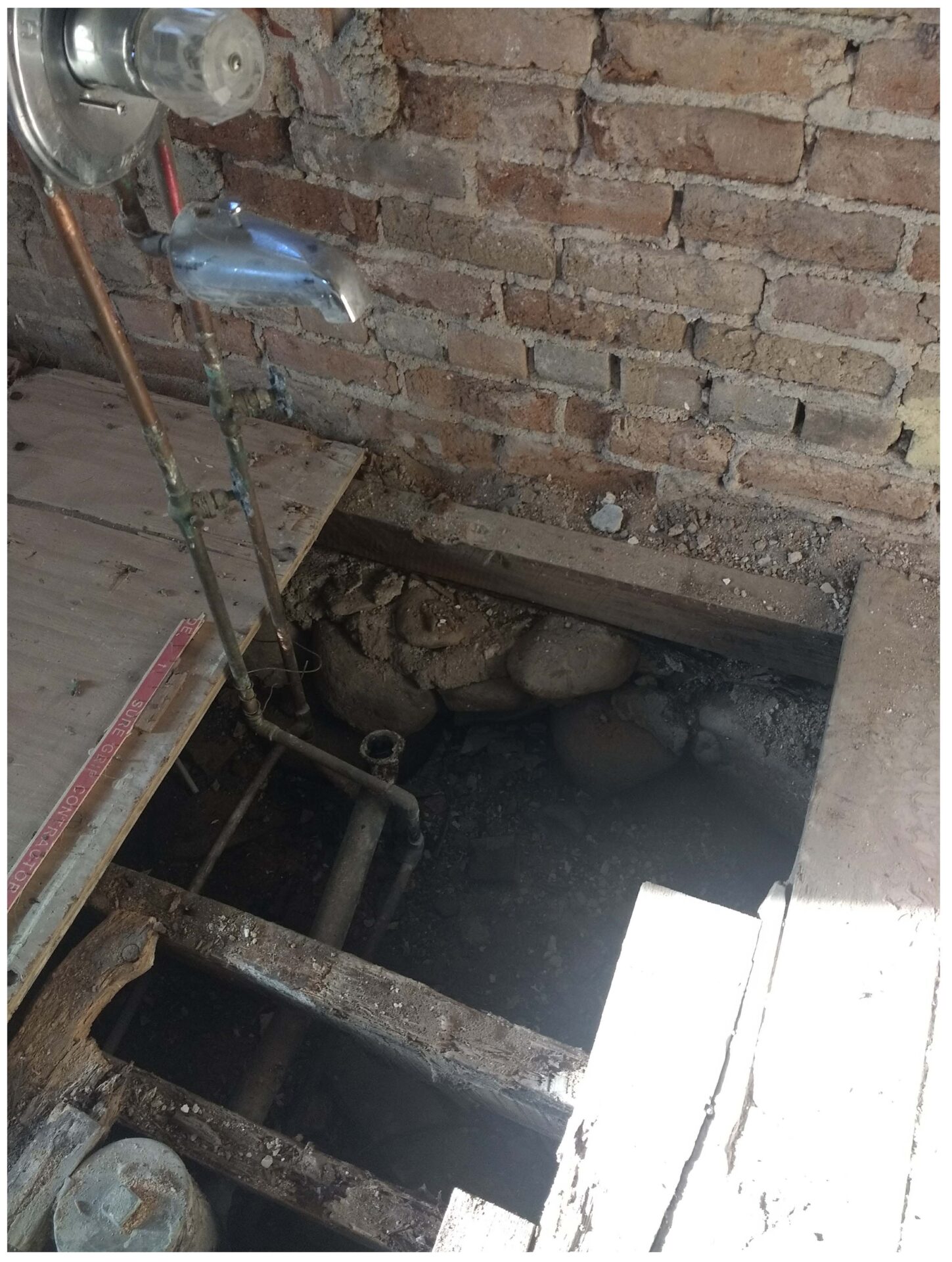
What Happens When a Seller Fails to Disclose Defects in Colorado??
Discovering a major problem after buying a home can be financially devastating. A buyer may move into a property and soon discover structural movement, repeated basement flooding, roof leaks, hidden moisture damage, unpermitted remodeling, or other serious conditions that appear to have existed long before closing.
The existence of a defect alone does not automatically make the seller liable.
Important questions typically include:
- Was the defect present before the sale?
- Was it material?
- Was it hidden or difficult for the buyer to discover?
- Did the seller actually know about it?
- What did the seller disclose in writing?
- Were there prior repairs, inspections, or insurance claims?
- Would the buyer have acted differently if the condition had been disclosed?
- What damages resulted?
Seller nondisclosure cases often turn less on proving that a defect exists and more on proving what the seller knew and when the seller knew it.
What is a Latent Defect Under Colorado Law?
A latent defect is generally a hidden or concealed physical condition that is not readily apparent through reasonable observation of the property.
Colorado has long recognized a duty to disclose known latent defects. In Cohen v. Vivian, the Colorado Supreme Court addressed a home constructed on problematic filled soil and recognized a duty to disclose a latent condition known to the seller.
Examples of potential latent defects may include:
- Expansive or unstable soils
- Foundation movement or settlement
- Hidden structural damage
- Recurring basement or crawlspace water intrusion
- Concealed roof leaks
- Moisture damage hidden behind walls
- Mold or wood rot caused by longstanding leaks
- Defective grading or drainage
- Concealed plumbing or sewer problems
- Significant defects covered by cosmetic repairs
- Certain undisclosed unpermitted improvements
Whether a particular condition qualifies as a latent defect depends on the specific circumstances.
How Do You Prove a Seller Knew About an Undisclosed Defect?
Proving actual knowledge is one of the most important parts of a seller nondisclosure case.
A seller rarely admits after closing that he or she knew about the problem. Knowledge is often established through circumstantial evidence.
Useful evidence may include:
Prior Repair Invoices
Invoices for foundation repair, waterproofing, roof work, drainage improvements, mold remediation, structural repairs, or plumbing work may show that the seller knew a problem existed.
Engineering or Contractor Reports
Reports, estimates, emails, text messages, and proposals can establish that a condition was specifically brought to the seller’s attention before the sale.
Insurance Claims
Prior insurance claims involving water damage, roof leaks, structural damage, plumbing failures, or similar conditions may be highly relevant.
Building Permits and Inspection Records
Permit records may show prior repairs or remodeling and can sometimes identify work performed without required permits.
Photographs and Prior Listings
Old listing photographs or photographs taken during repairs may reveal evidence of preexisting damage or prior attempts to address the condition.
Cosmetic Repairs
Fresh paint, new drywall, replaced flooring, patched cracks, or other work performed shortly before listing may become important if the work concealed evidence of an ongoing problem.
Cosmetic repairs alone do not prove fraud. But combined with other evidence, they may help show knowledge and concealment.
Neighbors and Contractors
Neighbors, former tenants, contractors, property managers, or other witnesses may know about prior flooding, drainage issues, roof leaks, foundation movement, or repair efforts.
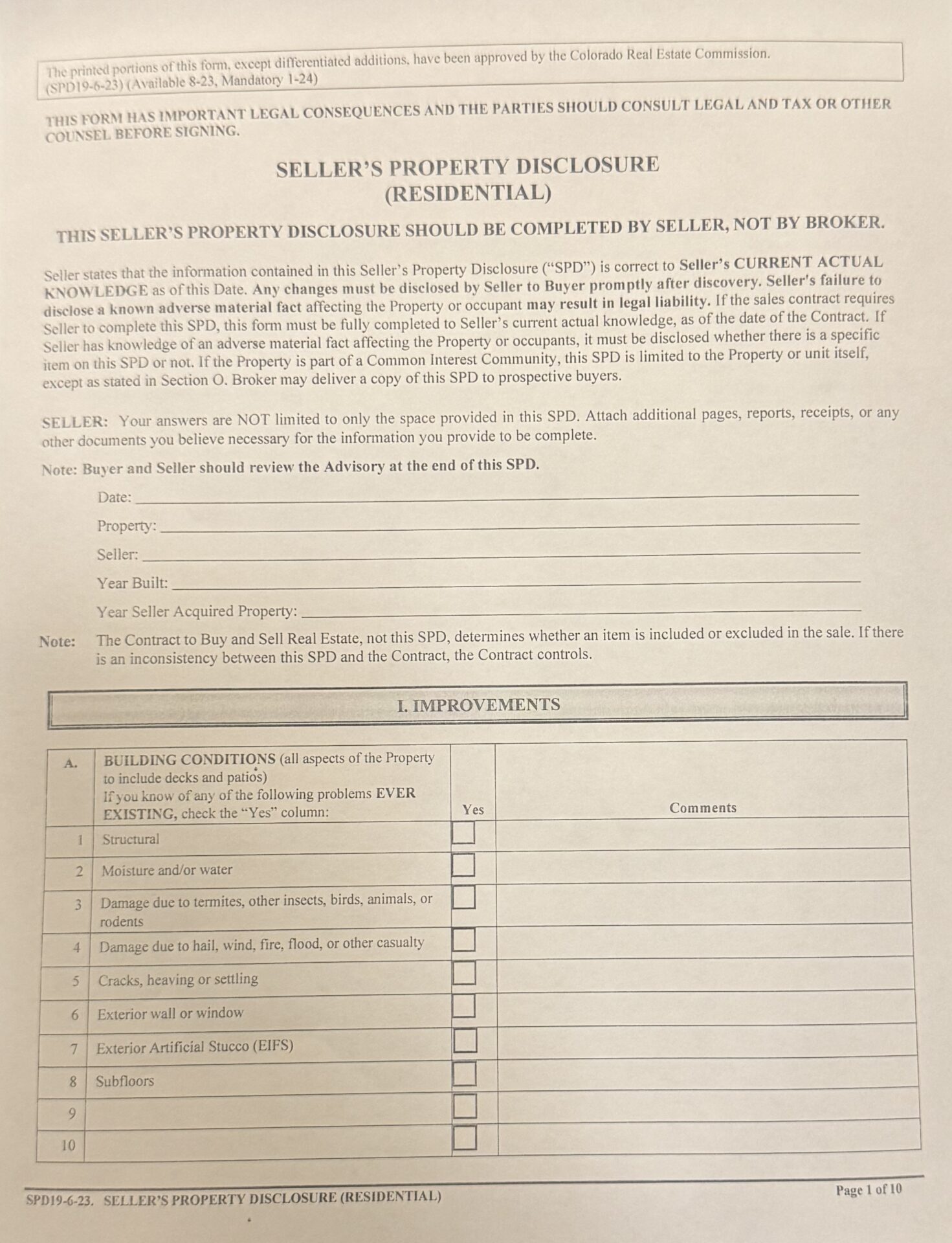
The Colorado Seller’s Property Disclosure
Residential sellers commonly complete the Colorado Real Estate Commission’s Seller’s Property Disclosure.
The form asks sellers to disclose information based on their current actual knowledge and addresses many aspects of the property, including structural conditions, roof issues, water intrusion, drainage, electrical systems, plumbing, environmental conditions, and other property matters.
The disclosure can become an important piece of evidence in a nondisclosure case. A false statement or deliberate omission may support a buyer’s claim depending on the circumstances.
The Seller’s Property Disclosure is important, but it is not necessarily the only source of a seller’s obligations. Colorado’s common-law duty concerning known latent defects may apply independently.
For example, questions may arise when a seller indicates that no known problem exists even though other records show:
- repeated prior repairs;
- previous engineering evaluations;
- insurance claims;
- waterproofing work;
- contractor estimates; or
- communications discussing the same problem.
What Is Fraudulent Concealment in a Colorado Real Estate Sale?
Fraudulent concealment may arise when a person has a duty to disclose a material fact and intentionally fails to do so.
In a real estate transaction, a buyer alleging fraudulent nondisclosure generally must establish facts showing:
- A material fact or defect existed.
- The seller knew about it.
- The seller had a duty to disclose it.
- The seller failed to disclose the information with the required intent.
- The buyer did not know the concealed fact.
- The buyer relied on the resulting false impression and suffered damages.
The precise legal claims available will depend on the facts of the transaction.
Importantly, a seller is not necessarily liable simply because a serious defect existed. Seller nondisclosure claims usually require evidence that the seller actually knew about the condition.
Does a Seller Have to Disclose Problems They Did Not Know About?
Generally, seller nondisclosure claims involving latent defects focus on actual knowledge.
That distinction matters.
For example, discovering major foundation movement after closing may prove that the property has a serious problem, but the buyer may still need evidence showing that the seller knew about that movement before the sale.
That is why evidence of prior repairs, engineering reports, contractor estimates, insurance claims, photographs, and communications can be critical.
Can a Seller Be Liable Even If the Buyer Had a Home Inspection?
Potentially, yes.
A home inspection does not necessarily eliminate a seller’s obligation to disclose a known latent defect.
The Colorado Supreme Court’s decision in Cohen v. Vivian recognized that an inspection does not necessarily protect a seller who knows of a latent condition that the buyer’s inspection fails to reveal.
That does not mean every defect missed by an inspector becomes the seller’s responsibility.
The analysis still depends on whether:
- the condition was latent;
- the seller knew about it;
- the condition was disclosed;
- the inspection identified warning signs; and
- the buyer reasonably relied on the information provided.
Can an “As-Is” Clause Protect a Seller Who Failed to Disclose a Defect?
An “as-is” provision does not necessarily give a seller the right to conceal a known latent defect.
Colorado law distinguishes between a buyer accepting the observable condition of a property and a seller failing to disclose a hidden condition known to the seller.
Contract language nevertheless matters. The purchase agreement may contain representations, inspection provisions, disclosure obligations, disclaimers, integration clauses, and other terms affecting the parties’ rights.
For that reason, the complete real estate contract should be reviewed before determining whether a viable seller nondisclosure claim exists.
The Economic Loss Rule and Seller Nondisclosure Claims
Colorado’s economic loss rule can limit certain tort claims where the alleged duty arises solely from a contract.
Seller nondisclosure claims are different in an important respect.
In In re Estate of Gattis v. McNutt, the Colorado Court of Appeals held that a home seller’s duty to disclose known latent defects arises independently of the parties’ real estate contract. As a result, the economic loss rule did not bar the buyers’ claims based on the alleged nondisclosure of known expansive-soil problems.
This can be important because a seller may not necessarily defeat a fraudulent nondisclosure claim merely by arguing that the dispute arose from a contract for the sale of the property.
Common Undisclosed Defects in Colorado Homes
Seller nondisclosure disputes frequently involve expensive conditions that may not become apparent until after closing.
Foundation and Structural Movement
Cracking, settlement, heaving, uneven floors, sticking doors, and shifting walls can result from soils problems, drainage conditions, construction issues, or other causes.
Previous engineering evaluations, foundation work, crack repairs, or repeated cosmetic patching can become important evidence.
Expansive Soils
Expansive soils are a significant issue in many parts of Colorado. Certain soils expand when wet and shrink when dry, potentially causing movement in foundations, slabs, basement floors, and other building components.
Prior soils reports, structural repairs, or drainage work may raise disclosure issues.
Water Intrusion and Drainage Problems
Recurring basement leaks, crawlspace moisture, defective grading, poor drainage, roof leaks, and water intrusion behind exterior finishes can cause extensive damage.
A buyer who discovers significant moisture damage shortly after closing should consider whether there is evidence that similar problems occurred before the sale.
Roof Leaks
A roof that leaks after closing does not automatically establish seller liability. But repeated prior repairs, insurance claims, ceiling patching, or contractor recommendations may present a different situation.
Unpermitted Remodeling
Undisclosed remodeling may become significant when work was performed without required permits or created structural, electrical, plumbing, or building-code problems.
Concealed Mold or Rot
Mold and wood rot are often symptoms of a larger moisture problem. The more important question may be whether the seller previously knew about leaking, flooding, or remediation and failed to disclose that history.
Special Rules for Builders, Developers, and House Flippers
Different issues may arise when the seller is a builder, developer, or house flipper.
Colorado law imposes additional disclosure obligations in certain sales of residential property, including statutory requirements related to soils information.
A dispute involving a builder, developer, or house flipper may therefore involve both seller nondisclosure and construction-defect issues, including:
- Construction defects
- Builder warranties
- Breach of contract
- Negligence
- Soils disclosures
- Engineering or design problems
These cases should be evaluated differently from a traditional resale between private homeowners.
How Long Do You Have to Sue a Seller for Nondisclosure in Colorado?
Colorado generally provides a three-year statute of limitations for claims based on fraud, misrepresentation, concealment, or deceit.
Determining when that period begins can be complicated.
The analysis may depend on when the buyer discovered—or through reasonable diligence should have discovered—the facts underlying the claim.
A buyer should not automatically assume that the limitations period began on the closing date. At the same time, a buyer should not assume that a claim remains timely simply because a defect was discovered recently.
If a serious undisclosed defect is discovered, it is important to investigate potential claims promptly.
What Damages Can a Buyer Recover?
Recoverable damages depend on the legal claims, the evidence, and the nature of the defect.
Potential damages may include, where legally available:
- Repair or remediation costs
- Loss in property value
- Engineering and investigation expenses
- Damage to other portions of the property
- Relocation or loss-of-use expenses in appropriate cases
- Rescission or other equitable relief in appropriate circumstances
- Interest
- Attorney fees where authorized by contract or statute
- Other damages caused by the nondisclosure
The proper measure of damages is fact-specific. A repair estimate does not necessarily establish the amount that may ultimately be recovered.
What Should You Do If You Discover Undisclosed Defects After Buying a House?
If you believe a seller failed to disclose a serious defect, preserving evidence early can be critical.
Document the Condition
Take detailed photographs and video before repairs begin.
Preserve the Entire Closing File
Keep the:
- Seller’s Property Disclosure
- Contract to Buy and Sell Real Estate
- Inspection reports
- Inspection objections and resolutions
- Amendments
- Emails and text messages
- MLS listing and photographs
- Closing documents
Obtain an Independent Expert Evaluation
Depending on the condition, this may involve a structural engineer, geotechnical engineer, building-envelope consultant, roofer, plumber, or other qualified professional.
When possible, the expert should evaluate not only what is wrong but also how long the condition appears to have existed.
Investigate the Property’s History
Relevant evidence may include permits, prior listings, contractor invoices, insurance records, engineering reports, HOA records, old photographs, and communications with neighbors or contractors.
Seller Nondisclosure Versus a Construction Defect Claim
A seller nondisclosure claim and a construction defect claim are not necessarily the same.
A construction defect claim typically focuses on whether a builder, contractor, subcontractor, architect, engineer, or other construction professional performed defective work.
A seller nondisclosure claim focuses primarily on what the seller knew and what the seller disclosed before the sale.
Sometimes both claims exist.
For example, defective construction may cause foundation movement. If a later owner learns of the movement, performs repairs, and then sells the property without disclosing the history, the new buyer may need to investigate both the original construction defect and the seller’s alleged failure to disclose it.
Need Help With a Nondisclosure Issue?
Discovering a serious defect after buying a home does not automatically mean the seller is legally responsible.
But when the evidence suggests that a seller knew about a hidden material condition and failed to disclose it, Colorado law may provide a remedy.
Sweeney Construction Law represents property owners in disputes involving seller nondisclosure, undisclosed property defects, hidden defects, construction defects, structural problems, water intrusion, defective construction, and related real estate disputes throughout Colorado.
If you purchased a property and later discovered a significant defect that you believe the seller knew about before closing, we can review the transaction documents, property history, expert findings, and other evidence to help determine whether you have a viable claim
If you need assistance, contact Sweeney Construction Law at 303-634-2274.
Disclaimer
The information provided on this page is for informational purposes only and does not constitute legal advice. Please consult with a qualified attorney for advice regarding your specific situation.


